

Looking for a fencing business near me? You want a contractor who shows up on time, understands local regulations, and installs a durable, attractive fence that fits your budget. Start by checking local fencing business reviews, recent job photos, and whether the company is insured and offers written estimates to quickly spot trustworthy options.
You’ll learn how to compare contractors, what service levels to expect, and which questions to ask to avoid surprises. Keep these checks in mind as you narrow choices so you hire a fencing team that delivers the result you want.
Finding the Best Fencing Business Near Me
Look for contractors with strong local reviews, clear service maps, and distinct offerings for residential or commercial projects. Prioritize firms that publish warranties, carry insurance, and provide written estimates with materials listed.
Local Reputation and Reviews
Check recent reviews on multiple platforms like Yelp, BBB, and local directories to see consistent patterns rather than single-star or five-star outliers. Focus on reviewers who describe the same project type you need—wood privacy, chain-link repair, or ornamental steel installation—so you compare similar work.
Ask for references and view completed-job photos. Contact two past customers about timeliness, cleanup, and whether the final cost matched the estimate. Verify complaints and resolutions on BBB or similar sites.
Look for local awards, long business history, or many project photos in your neighborhood. Those indicate repeat customers and familiarity with municipal permit requirements in your area.
Service Areas and Availability
Confirm the contractor lists your city or ZIP code and ask about travel or mobilization fees for jobs outside their core area. A local shop that advertises nearby service avoids surprise charges and usually knows local zoning and HOA rules.
Ask about lead time and schedules for peak seasons; some companies book 6–10 weeks in spring. Request a projected start and completion date in writing and confirm what weather delays mean for scheduling.
Check whether the company handles permits or inspections for you. If you need same-week repairs, prioritize businesses that offer emergency service or short-notice callbacks.
Commercial vs Residential Fencing Options
Identify whether the company separates commercial and residential portfolios; commercial jobs often require heavier posts, mesh, and security features, while residential work focuses on aesthetics and privacy. Request examples and spec sheets for fencing types used in both sectors.
Ask detailed questions about materials, load ratings, and warranty terms. For commercial sites, verify they can supply engineered shop drawings, comply with local codes, and install access control hardware. For homes, confirm stain/paint options, post spacing, and gate hardware choices.
Compare three written bids that list material brands, post sizes, fasteners, and labor hours. That lets you judge value and avoid vague, low-cost estimates that later increase with change orders.
What to Expect From Fencing Services
You will get an on-site assessment, a written quote with line-item costs, and clear options for materials and schedules. Expect timelines, warranty details, permit guidance, and post-installation maintenance plans.
Consultation and Quoting Process
A reputable contractor will start with an on-site visit to measure, check property lines, and note terrain, slopes, and access constraints. You should receive a written quote that breaks out labor, materials, gate hardware, permits, and disposal fees so you can compare bids directly.
Ask for proof of insurance, licenses, and references during the consultation. Confirm who handles utility locating and permit pulls. Expect a timeline estimate with start and completion dates, plus a cancellation or weather delay policy.
If boundary lines are unclear, the contractor may recommend a survey and include that cost as an option. Get payment milestones in writing—deposit amount, progress payments, and final payment tied to inspection and cleanup.
Types of Fencing Materials Offered
Contractors usually offer wood, vinyl/PVC, aluminum, chain-link, and steel/security options. Wood gives a natural look and can be built board-on-board or picket; expect staining or sealing recommendations to extend life.
Vinyl/PVC resists rot and needs minimal upkeep; ask about UV warranties and color-matching for posts and rails. Aluminum and wrought iron provide a low-maintenance ornamental option; they require powder-coating or galvanizing for corrosion resistance.
Chain-link is the cost-effective, utilitarian choice; ask about privacy slats and tension band upgrades. Commercial or high-security jobs may use serrated-top steel or welded-mesh panels—confirm anchor and footing specifications for wind and load conditions.
Installation and Maintenance Services
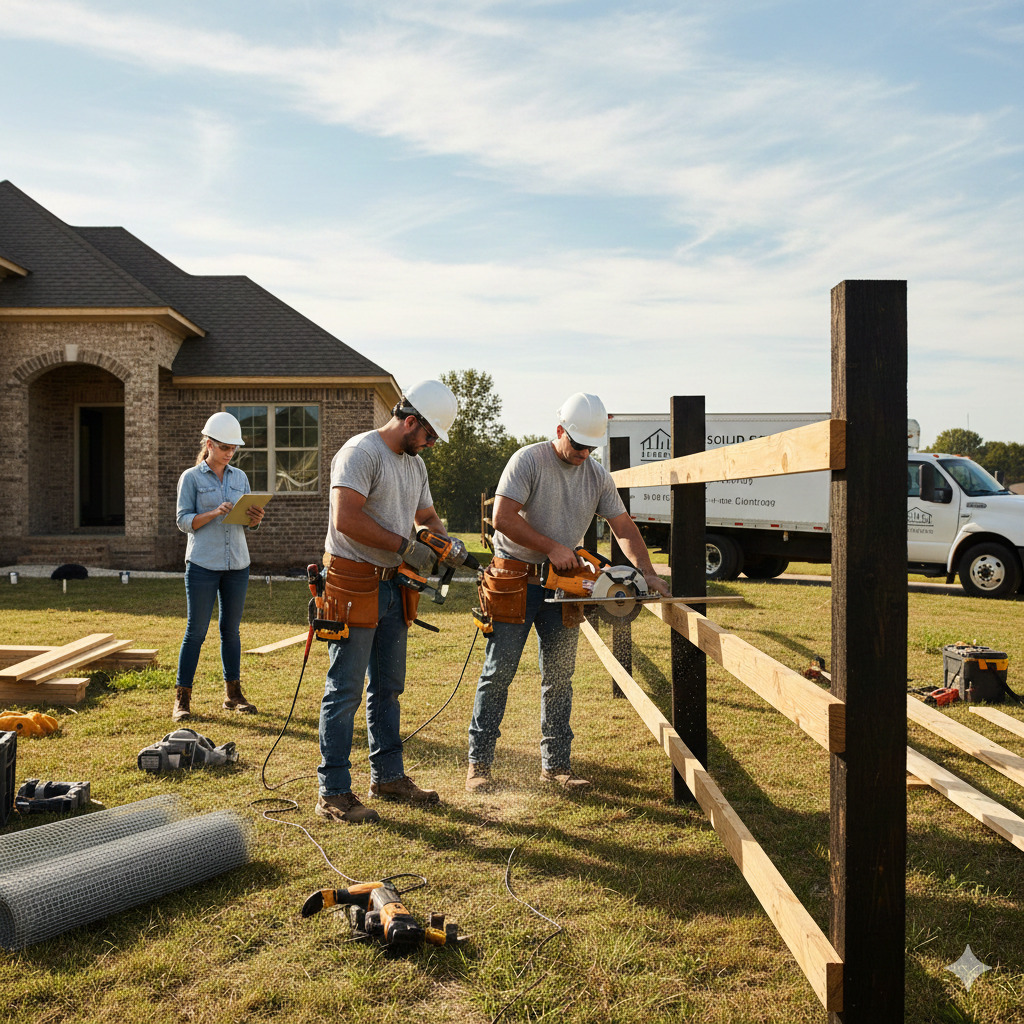
Installation typically begins with stake-and-line layout, post hole drilling or augering, concrete setting for posts, and then panel or picket attachment. Expect contractors to remove old fencing, haul debris, and leave the site broom-clean unless otherwise stated.
Maintenance services often include staining/painting, board replacement, hinge and latch lubrication, and rust treatment. Ask whether seasonal inspections, gate alignment checks, and warranty repairs are included or sold as a maintenance package.
Get specifics on post depth, concrete mix, and fastener types for your chosen material. These details determine longevity; contractors should document them in the contract and provide recommended maintenance intervals and estimated ongoing costs.