

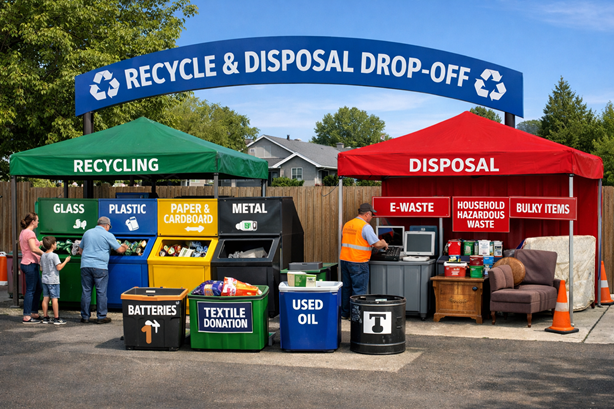
You handle complex materials every day, and industrial waste recycling gives you practical ways to turn those byproducts into value while shrinking your disposal costs and environmental footprint. You can reduce waste volumes, recover usable materials, and often cut disposal expenses by implementing targeted recycling and reuse processes for solvents, metals, plastics, and organics.
This article Industrial Waste Recycling shows how common industrial recycling processes work, what benefits to expect, and which operational challenges you’ll need to plan for so you can evaluate solutions that fit your facility. Expect clear, actionable insights to help you decide which recycling strategies deserve priority in your operations.
Industrial Waste Recycling Processes
You will encounter three core process groups: physical sorting and separation to isolate material streams, mechanical methods that recover and reprocess polymers and metals, and chemical technologies that break down complex or contaminated wastes. Each group requires different equipment, quality controls, and end‑product applications.
Sorting and Separation Techniques
You start by removing non-recyclables and segregating materials to protect downstream processes. Primary steps include manual picking for large contaminants and automated separation using conveyors, magnetic separators for ferrous metals, eddy current separators for non‑ferrous metals, and optical sorters that use near‑infrared (NIR) or color sensors to identify plastics by resin type.
Density- and size‑based methods improve purity. Flotation tanks and sink‑float separation separate plastics and organics by specific gravity. Trommels and screens grade particle sizes for shredders or granulators. You should also implement contamination controls like wash lines to remove residues and chemical treatments when needed.
Quality monitoring matters. Use inline sensors and periodic lab testing to track composition and contamination levels. Proper sorting reduces processing costs and increases the value of recovered materials.
Mechanical Recycling Methods
Mechanical recycling physically reprocesses materials without changing their chemical structure. For metals, you use shredders, magnetic separation, and induction furnaces to melt and cast new products. For plastics, the usual chain is shredding, washing, drying, extrusion, and pelletizing to produce regrinds that reenter manufacturing.
Control heat and shear to avoid degrading polymer properties. Additive dosing (stabilizers, compatibilizers) helps blend mixed resins or repair molecular weight loss. You must manage contaminants like PVC in PET streams; even small amounts can cause product failure.
Scale and contamination tolerance drive economics. Small on‑site units suit single‑material streams; centralized plants benefit from economies of scale and more advanced washing and pelletizing systems. Keep detailed traceability so you can certify recycled content for buyers.
Chemical Recycling Technologies
Chemical recycling breaks polymer chains or converts waste to basic feedstocks when mechanical recycling fails. Main routes include depolymerization (e.g., glycolysis, methanolysis for PET), pyrolysis to produce pyrolytic oils and gases from mixed plastics, and gasification to generate syngas from contaminated or composite wastes.
You should match technology to feedstock. Depolymerization works best on relatively clean, single‑polymer waste streams and yields monomers suitable for virgin‑quality polymers. Pyrolysis tolerates mixed, dirty plastics but requires catalytic upgrading to meet chemical industry specs. Gasification suits high‑calorific or composite industrial residues and can feed synthesis processes or power generation.
Operational controls are critical. Monitor reaction temperature, residence time, and catalysts to optimize yields and minimize hazardous byproducts. Integrate downstream purification (distillation, catalytic reforming) to obtain saleable chemicals or fuels.
Benefits and Challenges of Industrial Waste Recycling
Recycling industrial waste reduces pollutant loads, recovers valuable materials, and helps you meet legal and market requirements. The subsections below detail specific environmental, economic, and regulatory effects you should plan for and manage.
Environmental Impact Reduction
Recycling industrial waste cuts emissions and limits raw material extraction. For example, recovering metals from slag or e-waste reduces mining demand and the associated CO2 and habitat disruption.
You also lower landfill inputs by diverting non-hazardous solids—paper, plastics, and certain composites—into manufacturing feedstocks or energy recovery streams.
Contaminant control matters: mixed streams and chemical residues increase the risk of soil and water contamination if not processed correctly. You must implement source separation and decontamination steps to maintain recyclate quality and to avoid releasing heavy metals, solvents, or persistent organics during processing.
Tracking material flows and contamination rates helps prioritize investments in pretreatment and sorting technologies.
Economic Advantages
Recycling transforms waste streams into revenue or cost savings. Selling recycled metals, resins, and recovered solvents can offset disposal fees and lower raw-material purchasing costs.
You also reduce tipping fees and long-term liabilities tied to landfill use or hazardous-waste storage.
Operational savings arise from closed-loop designs that reuse process chemicals or water. Investing in sorting, baling, and purification often pays back through reduced input costs and increased supply security.
Be realistic about capital needs: upfront costs for equipment and training can be significant. Perform a simple payback and sensitivity analysis to decide which streams to target first, focusing on high-value or high-volume wastes.
Regulatory Compliance and Policies
You must comply with local, national, and sometimes international waste and recycling regulations. Proper classification of waste (hazardous vs. non-hazardous), record-keeping, and manifesting reduce legal exposure and fines.
Many jurisdictions incentivize recycling through tax credits, landfill-bans for certain streams, or extended producer responsibility (EPR) rules that shift end-of-life costs back to manufacturers.
Policy changes can affect your operations quickly, so build flexibility into contracts and processing capacity. Maintain documented chain-of-custody, employee training, and third-party audits to demonstrate compliance.
Engage with regulators and industry groups early to influence feasible timelines and access grant funding or technical assistance.
Disposal Best Practices for Businesses
Managing commercial waste doesn’t have to be a headache. You can cut costs, meet regulations, and reduce your environmental impact by choosing the right containers, pickup schedules, and recycling strategies for your business operations. A tailored commercial waste plan—matching dumpster size, pickup frequency, and recycling separation to your needs—delivers the biggest savings and compliance benefits.
This article Commercial Waste Disposal shows how to evaluate your waste streams, select practical service options, and implement simple operational changes that keep your facility efficient and compliant. Expect clear steps and actionable tips so you can make smarter waste decisions fast.
Understanding Commercial Waste Disposal
You must identify what your business produces, who can collect it, and which legal records to keep. Proper disposal protects staff, reduces costs, and avoids regulatory penalties.
Types of Commercial Waste
Commercial waste covers materials generated by your business operations rather than household waste. Common categories include:
- General waste: non-hazardous office and retail refuse such as packaging, food waste, and broken items.
- Recyclables: paper, cardboard, glass, plastics, and metals that can be separated for recycling.
- Food and organic waste: from kitchens, cafeterias, and catering; often suited to composting or anaerobic digestion.
- Hazardous waste: batteries, solvents, paints, certain chemicals, fluorescent tubes; needs specialist handling and storage.
- Construction and bulky waste: plasterboard, timber, concrete, and furniture from refurbishments.
Label storage areas, segregate streams at source, and quantify volumes (weight or bin counts) to choose the right containers and collection frequency.
Legal and Regulatory Requirements
You must follow duty of care rules and local licensing for commercial waste handling in England and similar regimes elsewhere. Keep a documented chain of custody using waste transfer notes or electronic equivalents for each movement of waste.
Comply with storage, labeling, and containment standards to prevent fly-tipping and pollution. For hazardous streams, you must use licensed carriers and authorised treatment facilities and retain hazardous waste consignment notes for specified retention periods. Expect audits; maintain records of waste quantities, disposal methods, and contractor details to demonstrate compliance.
Benefits of Proper Disposal
Proper disposal reduces your legal and financial risk by avoiding fines and cleanup costs. It also lowers operating costs when you cut disposal volumes through recycling and source reduction.
You protect staff and customers by reducing exposure to contaminants and fire risks from improper storage. Demonstrating responsible waste management enhances your reputation with customers, investors, and local authorities. Tracking waste data helps you identify reduction targets and measure savings from operational changes.
Common Waste Disposal Methods
Choose methods based on waste type, volume, and regulatory constraints. Typical options include:
- Kerbside or contractor collections: scheduled bin or compacting collections for general and recyclable waste.
- Recycling and material recovery facilities (MRFs): separate and process recyclables into marketable materials.
- Composting and anaerobic digestion: convert food and organic waste into soil amendments or biogas.
- Incineration with energy recovery: reduces volume and generates energy; suitable for non-recyclable, non-hazardous waste.
- Landfill (last resort): use only when other routes are unavailable; subject to strict controls.
- Licensed hazardous waste treatment: specialist disposal, neutralisation, or destruction for hazardous streams.
Assess cost, environmental impact, and regulatory acceptability when selecting contractors. Insist on proof of final treatment or recovery and retain all transfer documentation.
Implementing Effective Waste Disposal Solutions
You need practical steps to select the right partner, cut disposal costs, and adopt greener practices that meet regulations and operational goals. Focus on measurable metrics, contract terms, and on-site changes that reduce waste and improve diversion.
Choosing a Waste Management Provider
Select a provider with clear pricing, documented diversion rates, and service flexibility for your pickup frequency and dumpster sizes. Ask for a written service level agreement (SLA) that specifies pickup days, contamination thresholds, liability limits, and penalties for missed service.
Verify the provider’s certifications and local permits, and request recent audit reports or customer references in your industry. Confirm they offer itemized invoices and monthly reporting showing tons collected, recycling vs landfill split, and disposal fees so you can track cost drivers.
Negotiate contract length and escalation clauses; aim for one- to three-year terms with defined rate increases tied to a national index. Ensure they handle specialized streams you generate (e.g., cardboard, organics, e-waste, construction debris) or can subcontract reliably.
Reducing Costs Through Efficient Practices
Start by measuring waste by stream for 30–90 days to identify high-volume or high-cost materials. Use that data to prioritize interventions such as source separation, compaction, and right-sizing containers to reduce haul frequency.
Implement operational changes that shift cost burdens: install cardboard balers, train staff on contamination rules, and move to shared compactors for multiple units to lower per-ton transport fees. Use invoice audits to catch billing errors and recovery opportunities like metal recycling credits.
Set targets and track KPIs: cost per ton, diversion rate, pickups per week, and contamination rate. Tie staff incentives to measurable outcomes and review vendor performance quarterly to renegotiate services or add value streams that lower net disposal costs.
Sustainable and Eco-Friendly Options
Identify waste streams that can be diverted to recycling, organics, reuse, or energy recovery before landfill. Start with high-volume streams such as cardboard, food waste, and pallets; pilot-source separation and measure capture rates.
Evaluate circular solutions: partner with recyclers that offer closed-loop programs, work with food-waste processors for anaerobic digestion, or contract take-back programs for electronics and hazardous materials. Request lifecycle or carbon-impact data from vendors when comparing options.
Balance sustainability with compliance and cost: calculate avoided landfill fees and potential revenue from recyclables against collection and processing costs. Communicate changes to staff and customers using clear signage and training to reduce contamination and maximize the environmental benefits.