

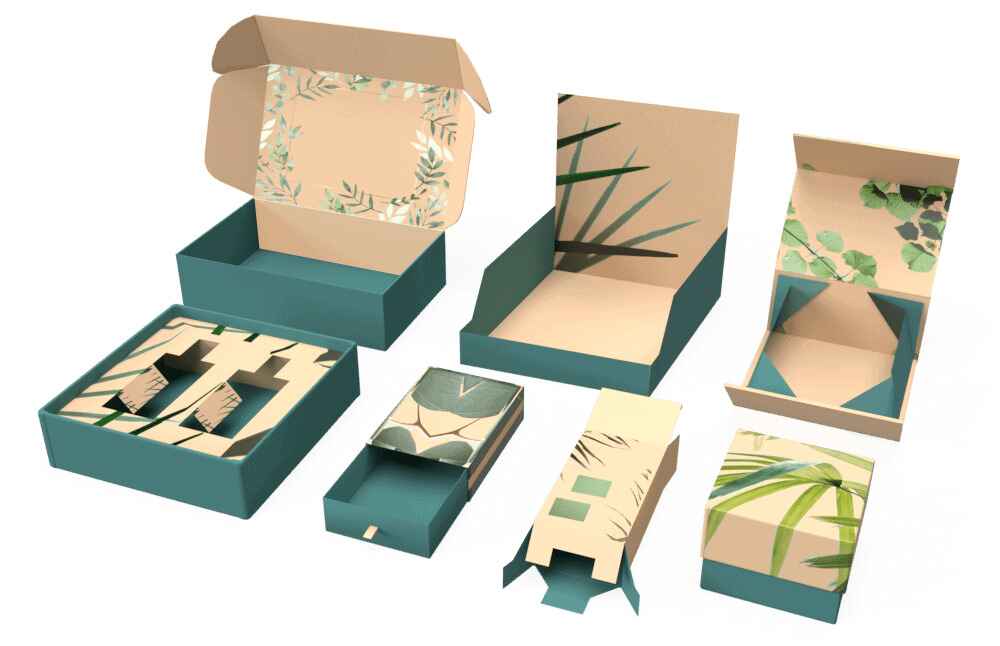
There’s a question I ask brands when they come to me frustrated about stagnant repeat purchase rates or weak customer referral numbers: “What does your packaging do after the product is out of the box?” Most of them pause. The honest answer is usually nothing. The box gets thrown away, recycled, or ignored. And that’s a missed opportunity that’s hiding in plain sight.
Packaging has a functional life and a brand life. Most brands manage the functional life reasonably well. The product arrives intact, the box opens cleanly, job done. The brand life is where value either gets built or left on the table entirely.
Printed Cardboard Boxes are the most accessible tool available for extending that brand life turning a functional shipping container into something that communicates, engages, and leaves an impression that outlasts the thirty seconds it takes to open.
What “Adding Value” Actually Means in Life
The phrase “Adding Value” gets thrown around a lot so let me be clear about what “Adding Value” actually looks like when we talk about printed packaging in terms of how it works and what it means for business.
It means a customer remembers where the product came from because the packaging made an impression. It means an unboxing moment that gets photographed and shared because the interior presentation was worth capturing. It means brand messaging delivered at exactly the right moment when the customer is engaged, holding the product, and already in a positive emotional state because something they ordered has arrived.
None of that happens with a plain brown box and a packing slip. It happens with Printed Cardboard Boxes that were designed to do more than contain a product during transit.
Print as a Communication Channel, Not Just Decoration
This reframe matters. When packaging print is treated as decoration, the brief becomes “make it look nice.” When it’s treated as a communication channel, the brief becomes “what do we need this customer to know, feel, or do at this moment?”
Those are different kinds of instructions that give really different results. A print job that is all about communication might have a code that takes you to a website with tips on how to take care of a product or a story about the company.
It might say something about how the company’s trying to be kind to the earth like using old boxes again or special ink that does not hurt the water and not using too much extra filling material. This is important when the customer is actually holding something that shows what the company is doing to help the earth.
It might also ask the customer to tell their friends about the company or remind them about a program for loyal customers or just include a nice note that makes the customer feel like a real person got their order, not just a machine. Printed Cardboard Boxes that say something, on purpose can turn getting a package into a way for the company to connect with the customer. That’s a commercial outcome, not just a creative one.
The Technical Side That Determines Whether Print Delivers
None of this works if the print execution doesn’t hold up. And print on corrugated packaging is technically more demanding than print on paper or card stock. The substrate has texture variation, especially with recycled board content. Ink absorption behaves differently across flute profiles. Color accuracy can drift between production runs if proper standards aren’t enforced.
Flexographic printing remains the most cost-effective method at volume for corrugated packaging. But it requires careful color management particularly for brand colors that need to read consistently across multiple production runs. Digital printing offers sharper detail and better color fidelity for shorter runs, with the added advantage of no plate costs, which makes versioning and limited editions economically viable.
IBEX Packaging integrates print specification into the structural packaging brief from the outset — not as a downstream decoration decision. That’s the right sequence. Print method, board surface preparation, and coating selection all affect each other, and getting them aligned before production starts is what separates packaging that looks as good physically as it does in a design file from packaging that disappoints at the proof stage.
Finish Choices That Create Tangible Brand Perception
Print finish is where perceived value becomes tactile. It’s the layer that customers feel before they consciously process what they’re seeing.
Matte lamination communicates restraint and quality. It reads premium across a wide range of product categories and pairs well with bold typography or minimal design approaches. Soft-touch coating amplifies this effect; it creates a velvety surface texture that is almost universally perceived as high-end, regardless of what’s printed beneath it.
Spot UV on a matte or soft-touch base is one of the most effective finishing techniques available in corrugated packaging. Applying a high-gloss UV coating selectively — over a logo, a product image, a brand mark creates visual and tactile contrast that draws attention to specific elements. Customers touch it. They notice it. That physical interaction creates memory in a way that flat print simply doesn’t.
These finish decisions on Printed Cardboard Boxes are brand positioning decisions made in material form. They tell the customer something about what the brand values before a single word is read.
Interior Print and the Unboxing Moment
Exterior print gets most of the attention. Interior print is often where the real brand opportunity lives.
The moment a box opens is a high-attention moment. The customer is engaged, the product is about to be revealed, and whatever they see on the interior surfaces of the packaging registers at a moment of genuine focus. An interior print, even a simple pattern, a brand color wash, a short message transforms that moment from functional to experiential.
For brands in gifting, subscription, or premium product categories, interior printing on Printed Cardboard Boxes is close to essential. It’s the difference between an unboxing that feels like receiving a gift and an unboxing that feels like opening a shipment.
Common Mistakes That Keep Appearing
Treating print as the last decision in a packaging project rather than one of the first. Print method affects structural decisions. Finish choices affect board selection. Getting print into the brief early prevents expensive late-stage compromises.
Also underinvesting in print consistency management. A brand that nails its packaging on the first production run and then allows color drift across subsequent runs is actively eroding the brand equity the original investment created. Print standards need to be specified, documented, and enforced at every reorder.
Conclusion
Packaging that does only its minimum functional job contains the product, survives transit, gets opened is packaging that’s leaving brand value uncollected at every single delivery.
Printed Cardboard Boxes designed with communication intent, executed with technical precision, and finished with deliberate material choices do something fundamentally different. They make the delivery moment count. They reinforce brand perception at a point of genuine customer engagement. They create the kind of impression that drives the behaviors brands actually want: repeat purchases, referrals, social sharing.
The brands investing in print that goes beyond basic packaging aren’t spending more for the sake of it. They’re recognizing that every box that leaves their fulfillment center is a brand interaction. Designing it accordingly is just good commercial sense.